
Packaging and food
Indicators showing when drinks are chilled, and warnings on cups, tableware and packaging.
Product range / Thermochromic paints and pigments
Professional thermochromic paints, pigments and smart coatings that change colour, fade or become transparent when exposed to heat or cold. We match the activation temperature, binder and application technology to each project.
Practical applications
Thermochromic paint provides an immediate, clear visual effect without electronics. It can indicate when a drink is properly chilled, warn of a hot surface, reveal hidden graphics or protect a product against counterfeiting.
Indicators showing when drinks are chilled, and warnings on cups, tableware and packaging.
Interactive leaflets, prints, mugs, textiles and graphics revealed by the warmth of a hand.
Warning coatings, process monitoring and security features for tickets, certificates and premium packaging.

Full product range details
Thermochromic paints are smart coatings containing microencapsulated colour systems. When heated or cooled, they change colour, fade or become transparent, revealing the print underneath. In reversible versions, the original colour returns when the temperature changes in the opposite direction.
The reaction occurs over a range rather than at a single, sharply defined point. For example, a material rated at 31 °C may start to fade at around 27 °C and reach its full effect near 35 °C. Before full-scale production, we therefore select the threshold, colour, binder and coating thickness through tests on the intended substrate.
Thermochromic pigments and paints are used in packaging, printing, advertising, brand protection and textiles, as well as for visual temperature warnings. Available options can be adapted for screen printing, flexographic printing, offset printing and spray application.
Depending on the technology, materials are available for temperatures ranging from below zero to high industrial temperatures. Non-standard thresholds require individual confirmation, and pigments must be protected against moisture and prolonged UV exposure.
Response mechanism
01
At room temperature, the coating retains a strong, opaque colour.
02
The change usually begins a few degrees before the nominal activation temperature.
03
Once the transition range has been passed, the paint fades, becomes transparent or changes shade; reversible versions regain their colour on cooling.
Application examples
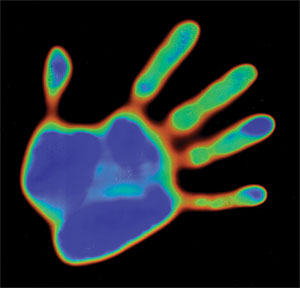
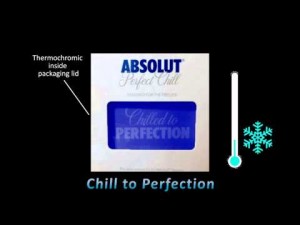
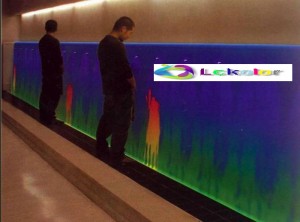
Ready-formulated coatings that respond to heat or cold
How it works
Paints that change colour at a specified temperature. They can fade, become transparent to reveal graphics underneath or change shade. We select the solution to suit the substrate and application method.
Application and use
When a ready-formulated paint or coating matched to the application method and substrate is required. Test the material on the intended substrate and select it to suit the application method. The durability of the effect depends on factors including the binder, coating thickness and UV exposure.
| Response | heat or cold |
|---|---|
| Effect | reversible or permanent |
| Selection | application-specific |
Data based on the manufacturer's documentation. Full datasheets are available in the documentation below.
Manufacturer's video
Product FAQ
When a ready-formulated paint or coating matched to the application method and substrate is required.
For a quotation, please provide details of the substrate, application method, colour, activation temperature, UV exposure and required quantity. Key features of this solution include reversible and specialist irreversible versions and for screen printing, flexography, offset and spray application.
Microencapsulated pigments for your own formulations
How it works
Pigments for developing your own paint, plastic or coating. Microcapsules protect the colour system and enable a repeatable visual effect in response to temperature changes.
Application and use
When a manufacturer wants to develop its own paint, varnish, plastic or composite formulation. Test the material on the intended substrate and select it to suit the application method. The durability of the effect depends on factors including the binder, coating thickness and UV exposure.
| Form | microcapsules |
|---|---|
| Threshold | selected to suit |
| Implementation | after testing |
Data based on the manufacturer's documentation. Full datasheets are available in the documentation below.
Product FAQ
When a manufacturer wants to develop its own paint, varnish, plastic or composite formulation.
For a quotation, please provide details of the substrate, application method, colour, activation temperature, UV exposure and required quantity. Key features of this solution include for paints, varnishes, plastics and printing systems and effect triggered by product or ambient temperature, or the warmth of touch.
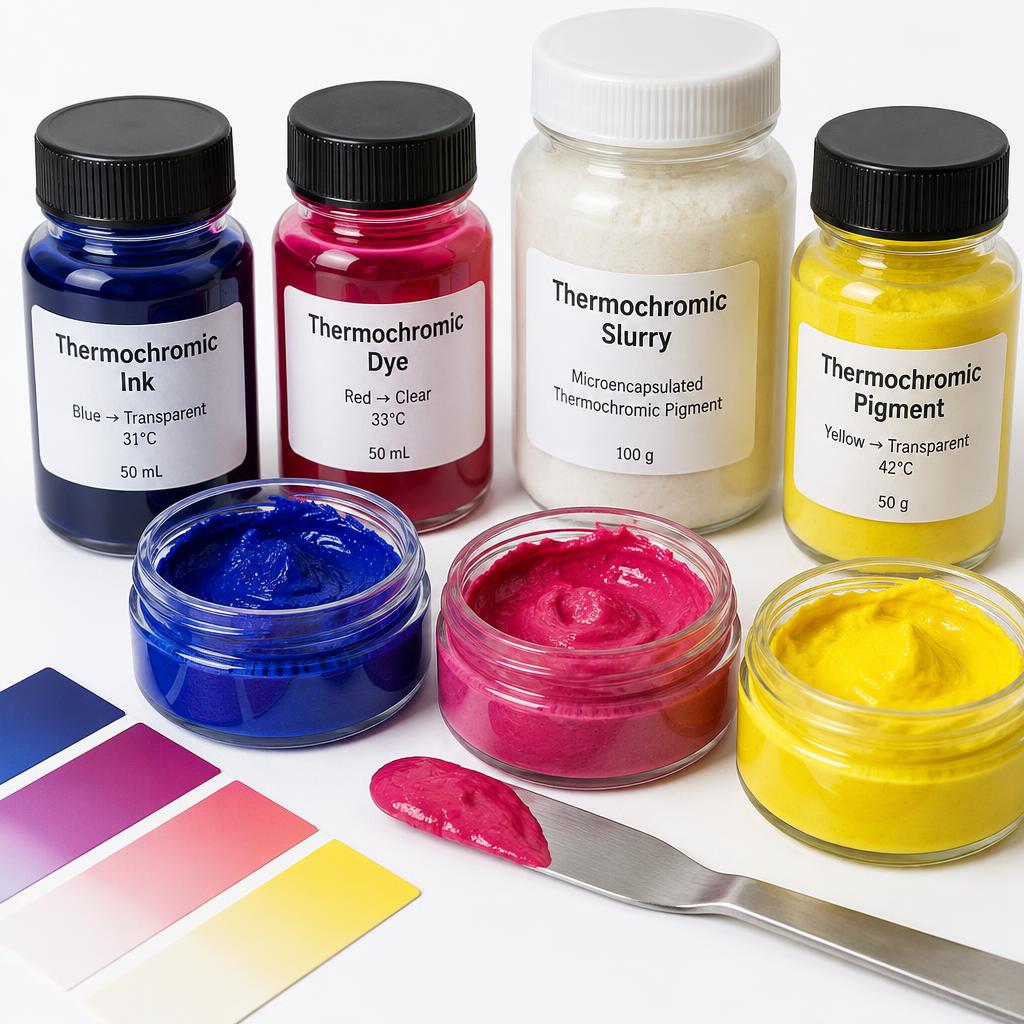
Thermochromic materials for printing and custom products
How it works
Inks, colourants and pastes that change colour with temperature. Options include versions activated by the warmth of a hand or by cold, and formulations matched to a specific printing method and substrate.
Application and use
For screen printing, flexo, offset and other printed applications that change appearance with temperature. Test the material on the intended substrate and select it to suit the application method. The durability of the effect depends on factors including the binder, coating thickness and UV exposure.
| Methods | screen printing, flexo, offset |
|---|---|
| Substrates | paper, films, textiles |
| Availability | on request |
Data based on the manufacturer's documentation. Full datasheets are available in the documentation below.
Manufacturer's video
Product FAQ
For screen printing, flexo, offset and other printed applications that change appearance with temperature.
For a quotation, please provide details of the substrate, application method, colour, activation temperature, UV exposure and required quantity. Key features of this solution include materials activated by touch, heat or cooling and for packaging, security features and promotional products.
Questions to consider before choosing
Common options include temperatures around 15 °C, 31 °C, 37 °C and 47–60 °C and above. We select the exact threshold to suit the product's function and operating conditions.
Reversible versions are most commonly used: they regain their original colour when the temperature returns to its initial value. Irreversible options are also available for recording threshold breaches.
Depending on the binder and technology, they can be used on paper, cardboard, films and plastics, glass, ceramics, metal and textiles. Every application requires testing on the intended material.
Prolonged UV exposure can weaken the effect. For outdoor applications, we recommend durability testing, limiting exposure or using a suitable protective layer with a UV filter.
The activation temperature, colour, printing technology, substrate type, required durability and order quantity. We use these details to prepare a tailored quotation.
Thermochromic paints and pigments require testing on the intended substrate. The effect depends on factors including the binder, coating thickness, background colour, UV exposure and operating conditions.
Preparing a quotation
The more information you provide at the outset, the sooner we can select the material and prepare a quotation.
Free quotation
We help you choose the right variant and threshold for your application — we usually prepare a quotation within 1 working day. You can also call: +48 22 666 82 95.
Other product groups
Cold chain indicators
Single-use heat and cold indicators for chilled shipments.
Thermax temperature indicator strips
Eight temperature-sensitive zones for a permanent temperature record.
Liquid crystal thermometers
Reversible Digi-Temp® thermometers — horizontal and vertical, with 7, 8, 10, 13 and 16 segments, plus the Digi-Temp® EZ series.
Hygiene, sterilisation and food safety
Indicators for dishwashers, thermal disinfection and food temperature checks.
Thermochromic labels and liquid crystals
Temperature-responsive colours: labels, sheets and inks.
Medical and blood donation solutions
Forehead thermometers and indicators for medicines and blood containers.
Temperature and humidity data loggers
USB data loggers with PDF reports for dry ice, pasteurisation and humidity monitoring.
ShockWatch shock indicators
Single-use ShockWatch impact indicators for shipments and products.
Shock recorders and condition monitors
ShockLog, gView and SpotBot — impact, vibration and environmental monitoring.
TiltWatch tilt indicators
TiltWatch — check whether shipments stayed upright in transit.